Learn Electronics by Building Real Circuits
From logic gates to full IoT smart home systems, every tutorial on Procirel is physically built, measured on an oscilloscope, and explained by a working electronics engineer. No filler. No copy-paste theory.
Quick Answer: Where should I start?
If you're new: visit our Electronics Fundamentals guide, then pick up an Arduino Uno (~$25) and follow the Arduino beginner series. Most readers go from zero to a working IoT sensor in under 4 weeks.
Advertisement
Pick a Topic. Build Something Real.
Each category is a structured collection of tutorials from basics to advanced. Pick the one that matches what you want to build and work through them in order.

Arduino & Microcontrollers
LED blink to full automation systems: sensors, LCDs, motors, serial comms and complete Arduino builds, each tutorial building on the previous.

Electronics Fundamentals
Components and theory: voltage, current, Ohm’s law, diodes, transistors, op-amps, filters and oscillators the foundation every electronics engineer needs.

Electrical Engineering
AC/DC power systems, transformers, motor drives, wiring schematics, safety and practical industrial electrical engineering.

PCB Design
Schematic capture, footprints, layout rules, routing, DRC checks, Gerber export and ordering boards from fab houses.
Tools & Equipment
Oscilloscopes, multimeters, soldering technique, logic analyzers and bench power supply setup and reviews.
IoT, Sensors & ESP32
ESP32/ESP8266 programming, WiFi and MQTT, cloud dashboards, sensor interfacing and complete smart-home builds.
Latest Tutorials & Project Builds
Fresh content, each tutorial physically built on our bench, photographed, and explained step-by-step with complete circuit diagrams and working code before going live.
 New
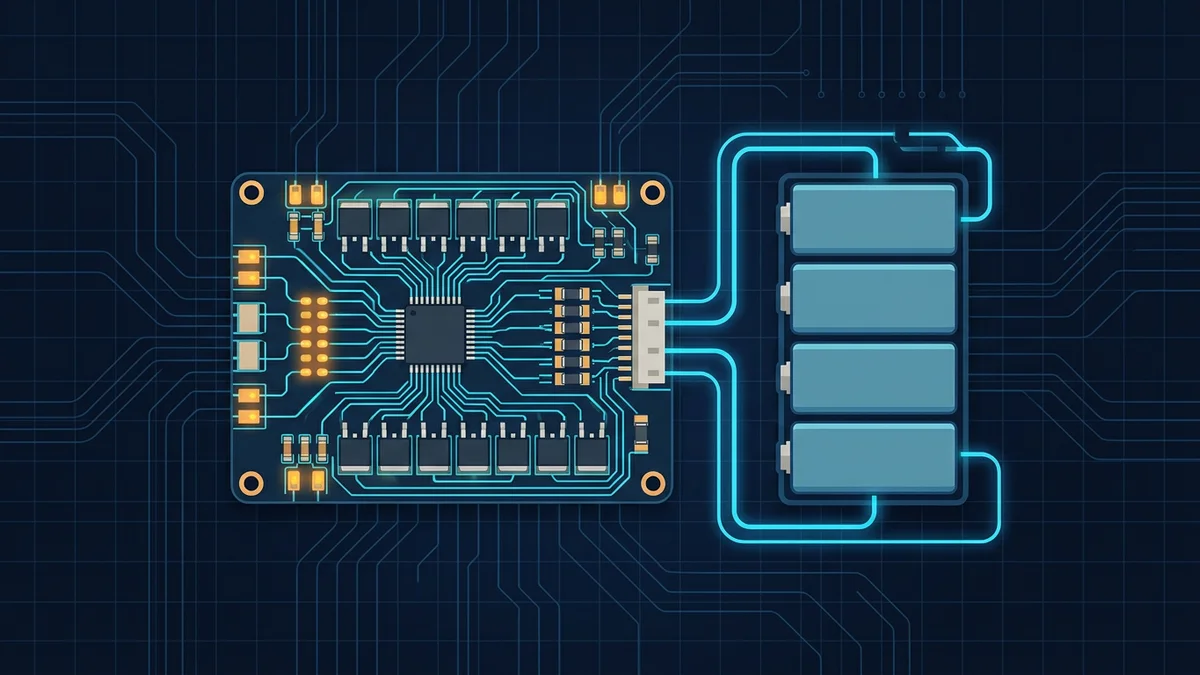
NewBMS Design Tutorial: Battery Management Systems Explained
How a BMS protects lithium packs cell monitoring, balancing, protection thresholds and designing your own.
 Electronics
Diodes and Transistors Explained: The Two Semiconductor Families
Two terminals versus three, one junction versus two how diodes and transistors relate, differ and work together.
 IoT,
IoT,LoRaWAN for Beginners: Long-Range IoT Without WiFi
Kilometres of range on microamps how LoRa modulation and LoRaWAN networks work, and when to choose them.
Advertisement
Browse All Tutorials
Every article on Procirel, all live, all bench-tested. Filter by category to find what you need.
Electronics Fundamentals: The Complete Guide (Components, Theory...
Arduino: The Complete Guide From First Blink to Working Robots
IoT & ESP32: The Complete Smart Devices Guide
Electrical Engineering: The Complete Practical Guide (Power, Moto...
PCB Design: The Complete Guide from Schematic to Fabrication
Amplifiers & Audio: The Complete Design Guide
Power Supplies & Batteries: The Complete Guide
Tools & Equipment: The Complete Bench Guide
BMS Design Tutorial: Battery Management Systems Explained
Diodes and Transistors Explained: The Two Semiconductor Families
LoRaWAN for Beginners: Long-Range IoT Without WiFi
Antenna Basics for IoT: Wavelength, Gain and Matching
Passive Components: Resistors, Capacitors and Inductors Compared
Solar MPPT Explained: Maximum Power Point Tracking
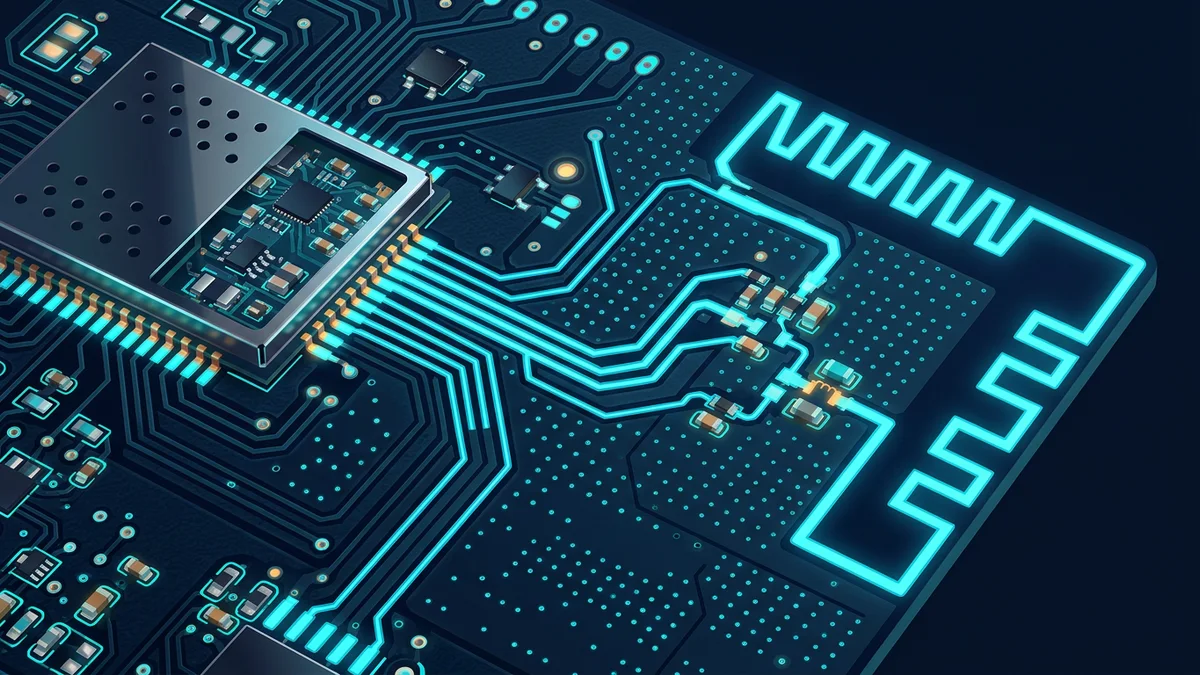
RF PCB Layout: Rules for WiFi, LoRa and Beyond
The PN Junction Diode: Physics, Curves and Applications

PID Controller Explained: Proportional-Integral-Derivative in Practice

Ohm's Law Tutorial: The One Formula That Runs Everything

Biomedical Sensors: How Wearables Measure the Body

What Is an Embedded System? Microcontrollers in Everything
Not Sure Where to Start? Try These.
Curated collections grouping our most useful tutorials by experience level.
Best for Beginners
Just getting started? These tutorials are where every Procirel reader begins, simple language, complete wiring diagrams, zero assumed knowledge.
Most Popular Guides
Our highest-traffic tutorials, the ones thousands of readers bookmark and come back to. Proven useful by the community.
- Two Way Switch Wiring Diagram & Working Installation→
- Adaptive Delta Modulation - Advanced Signal Encoding Technique→
- How a Transistor Works Transistors Explained So Simply→
- How to Choose the Right DC Motor for DIY Electronics Projects→
- Engineer’s Guide to Moving Iron Instrument Calibration and Maintenance→
Advanced & Deep Dives
For experienced builders ready for complex topics, multi-component projects, signal integrity, and professional engineering decisions.
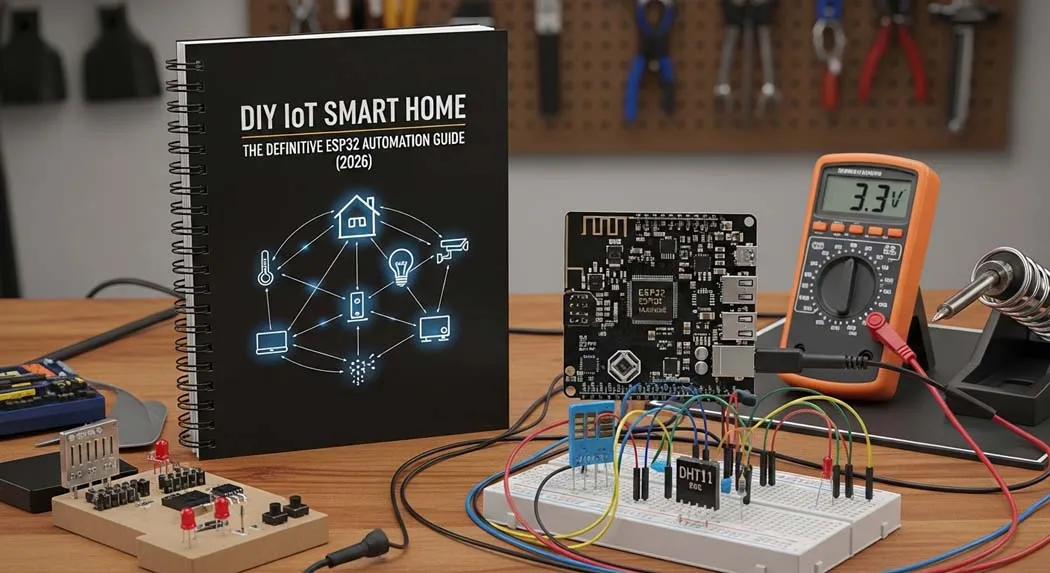
- DIY IoT Smart Home Using ESP32 Local Home Automation Guide→
- Class D vs. Class AB Amplifier: Which is Best for Your Home Audio?→
- Signal Noise in Circuits: Why It Happens and 5 Proven Ways to Eli...→
- PCB Design: The Complete Guide from Schematic to Fabrication→
- How a Transistor Works Transistors Explained So Simply→
Advertisement
Every Tutorial Follows These 6 Rules
We've seen too many tutorials that dump a circuit diagram without context, paste uncommented code, and leave you stuck. Here's the standard every Procirel guide must meet before it goes live.
Complete Circuit Diagrams
Every project has a proper schematic drawn in EDA tools, plus a breadboard wiring diagram showing exactly where each wire connects. No blurry hand-drawn sketches. No guessing which pin goes where.
Fully Commented Code
We comment every line that matters. Each function, variable, and register access is explained, what it does and why we chose that approach. No mysterious code blocks you're expected to just trust.
Complete Parts List
Exact component specifications, quantities, where to buy them, and affordable alternatives. We tell you if it's a 1/4W or 1/2W resistor, details that actually matter in practice.
Physically Built & Tested
Every circuit gets assembled on our bench. Every code snippet is compiled and uploaded to a real board. If the LED didn't blink on our desk, the tutorial doesn't go on this website. Period.
Theory Where It Matters
We explain the "why" behind every design choice, why that pull-up is 10KΩ, why decoupling caps sit near IC power pins, why your transistor needs a base resistor. Understanding beats memorization.
Troubleshooting Section
Things go wrong, we know because we've made every mistake ourselves. Each tutorial ends with common problems and their exact solutions, so you don't spend hours debugging something we already solved.
Why Precision Matters in Circuit Design
Most tutorials treat electronics like LEGO, snap pieces together and it works. Reality is different. At the atomic level, electrons moving through copper traces follow the laws of physics with zero tolerance for sloppy design. A trace that's too thin will overheat under load. A ground plane with gaps will radiate electromagnetic interference. A decoupling capacitor placed 2cm away from an IC instead of 2mm will fail to filter the high-frequency noise it was supposed to catch.
This is why we go deeper than 'connect wire A to pin B.' Understanding the physics gives you the ability to design circuits that work reliably, not just on your bench, but in a real product running 24/7.
- Thermal Management MattersEvery component generates heat. A voltage regulator without proper heatsinking will enter thermal shutdown. See: Amplifier Overheating Guide
- Signal Integrity Is RealAbove a few MHz, PCB traces stop being simple wires and start behaving like transmission lines. See our Ground Planes & Return Paths guide.
- Component Tolerances Add UpA "10KΩ resistor" with 5% tolerance could be 9.5KΩ–10.5KΩ. In a precision divider, tolerances stack. See: Voltage Divider Calculator
- Power Supply Design Is FoundationNoisy power kills circuits silently. See: Power Supplies & Batteries Guide and LM317 Calculator
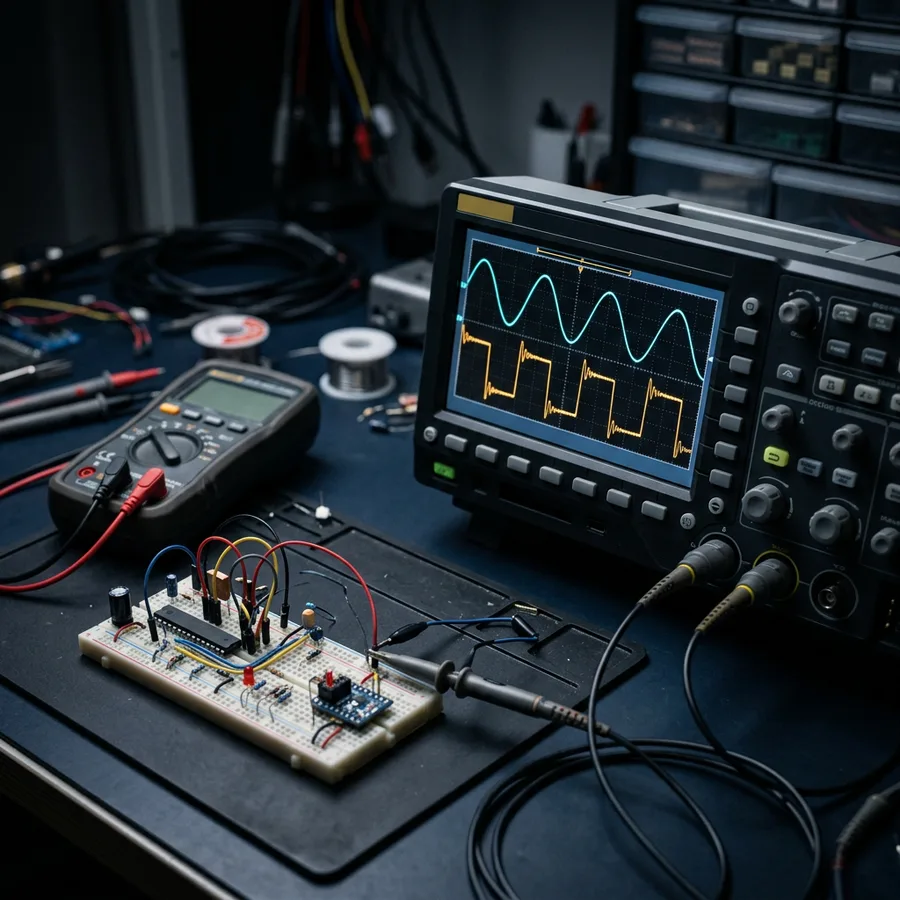
Microcontroller Board Comparison, Specs at a Glance
Choosing between boards is one of the most common questions we get. This table covers the boards we actually use and teach, with real specs, street pricing, and honest difficulty ratings.
| Board | Processor | Clock | Flash | RAM | WiFi/BT | ~Price | Best For | Difficulty |
|---|---|---|---|---|---|---|---|---|
| Arduino Uno R4 WiFi | Renesas RA4M1 | 48 MHz | 256 KB | 32 KB | Yes/Yes | $27 | Beginners | Easy |
| Arduino Nano | ATmega328P | 16 MHz | 32 KB | 2 KB | / | $5 | Compact | Easy |
| ESP32-WROOM | Xtensa LX6 Dual | 240 MHz | 4 MB | 520 KB | Yes/Yes | $6 | IoT | Medium |
| ESP8266 NodeMCU | Xtensa L106 | 80 MHz | 4 MB | 80 KB | Yes/ | $3 | WiFi | Medium |
| RPi Pico W | RP2040 Dual ARM | 133 MHz | 2 MB | 264 KB | Yes/Yes | $6 | MicroPython | Medium |
| STM32 Blue Pill | Cortex-M3 | 72 MHz | 64 KB | 20 KB | / | $3 | Embedded | Hard |
| STM32F4 Discovery | Cortex-M4F | 168 MHz | 1 MB | 192 KB | / | $20 | Professional | Advanced |
| Teensy 4.1 | Cortex-M7 | 600 MHz | 8 MB | 1 MB | / | $32 | Audio/Speed | Hard |
Specifications from official manufacturer datasheets. Prices approximate based on current retail averages. Difficulty reflects learning curve for someone new to that platform.
Industry Experts We Follow & Recommend
Electronics is a deep field and no single source covers everything. These are the educators and creators whose work has shaped how we teach and build.
Ben Eater
Built an entire 8-bit computer on breadboards, explaining every logic gate and clock cycle. His CPU architecture series is genuinely unmatched in clarity.
YouTube →GreatScott!
Practical electronics projects explained brilliantly, custom power supplies, PCB design, motor drivers. His ability to make complex topics approachable inspires our writing.
YouTube →Andreas Spiess
"The guy with the Swiss accent." Deep technical dives into ESP32, LoRa, WiFi modules, and IoT sensors. Rigorous testing methodology we strive to match in our own reviews.
YouTube →Phil's Lab
Professional-grade PCB design tutorials using KiCad and Altium. His STM32 hardware design series got us serious about proper board layout, impedance control, and power integrity.
YouTube →Never Touched a Circuit Before? Start Here.
You don't need an engineering degree or expensive equipment. Follow these four steps and you'll have working circuits on your desk within your first week.
Learn the Basics
Visit our Electronics Fundamentals guide. Understand voltage, current, resistance, Ohm's law, and how to read circuit diagrams. Takes about 3–4 days of casual reading.
Get a Starter Kit
Grab an Arduino Uno starter kit for around $25–35. It comes with a board, breadboard, LEDs, resistors, jumper wires, and basic sensors, everything you need to begin.
Follow the Arduino Guide
Follow our Arduino beginner series. Each project builds on the last, from LED blink all the way to sensor-based projects with real code.
Pick Your Direction
IoT excites you? Head to the IoT & ESP32 track. Want circuit boards? Start the PCB Design path. Power electronics? See the Power & Batteries guide.
20 Common Questions About Learning Electronics
Practical answers to what beginners and intermediate learners ask most, honest guidance from someone who has been through the entire learning curve.
Why Engineers Choose Procirel
Three commitments that decide whether a tutorial helps you or wastes your evening.
Bench-Tested, Always
Every circuit is physically built and measured before publication. If it did not work on our desk, it does not appear on the site.
Engineer-Written
Guides by Oliver Adam, M.S. Electronics, with a documented editorial process and public corrections.
Formula Transparency
Twenty calculators that show the exact equation and standard behind every answer. No black boxes, ever.
What Sets Us Apart
The five differences between Procirel and the content farms, in plain words.
Real measurements
Scope captures and meter readings from our bench, with test conditions stated.
Structured learning paths
Every topic is a track that builds from first principles to real projects.
Datasheet-verified
Every rating checked against the manufacturer datasheet, not a forum post.
Mistakes documented
Each guide lists the failures we made, so you skip them.
Corrections in public
Errors fixed and dated, never silently rewritten.
Dig deeper
The full breakdown lives on the What Sets Us Apart page.
Accuracy First, Always
When speed and accuracy conflict, accuracy wins. Datasheet verification, measured values, scheduled re-verification and public corrections, that is the whole policy. Read it on the Our Priority page.
What Readers Say
Students, hobbyists and lecturers who built something real with these guides.
"The only electronics site where I never check a second source."
"The ESP32 brownout guide fixed a problem three forums could not."
"I teach from these tutorials. The worked examples are exactly right for labs."
Get New Tutorials in Your Inbox
One email when a new tutorial drops. No spam, no weekly roundups, no fluff, just the guide, when it's ready.
Free forever. Unsubscribe any time. No sharing your email with anyone.
Advertisement