Exciting Electronics Projects: A World of Creativity and Innovation
In the realm of electronics, projects are the ultimate playground for exploring new technologies, honing your skills, and pushing the boundaries of what you can create. Whether you’re a hobbyist looking to experiment with simple circuits or an engineer designing advanced systems, electronics projects are essential in turning theoretical knowledge into practical, tangible applications.
This comprehensive guide covers various types of electronics projects, offering inspiration, details on essential components, and step-by-step instructions to get started on your own. Whether you’re looking for beginner-friendly projects or more complex challenges, there’s something here for every level of expertise.
The Power of Electronics Projects
Electronics projects are a powerful way to apply your knowledge and gain hands-on experience. They encourage creativity, problem-solving, and learning through experimentation. By building projects, you not only get to learn about circuits, sensors, microcontrollers, and actuators but also develop critical thinking and troubleshooting skills.
Here’s why electronics projects are valuable:
Hands-on Learning: Putting theory into practice is one of the most effective ways to learn. Projects offer a chance to apply concepts like voltage, resistance, and current flow to real-world applications.
Skill Development: From soldering components to coding microcontrollers, you’ll develop a wide range of technical skills.
Problem-Solving: Encountering and solving real-world issues, like debugging a malfunctioning circuit, sharpens your analytical and problem-solving abilities.
Innovation and Creativity: Projects provide a platform to innovate and come up with original solutions, helping you improve existing technologies or invent new ones.
Portfolio Building: Successfully completed projects showcase your skills, which is invaluable if you are looking to pursue a career in electronics or engineering.
Categories of Electronics Projects
Depending on your interests and expertise, you can choose from various categories of projects. Each category offers a unique set of challenges and learning opportunities.
1. Beginner Electronics Projects
For those just starting with electronics, beginner projects are the best way to learn basic concepts and gain confidence. These projects focus on simple components, basic circuits, and easy-to-follow instructions.
Examples of Beginner Electronics Projects:
LED Blink Circuit: The most classic beginner project involves blinking an LED light with the help of a resistor and a switch. This project teaches the basics of current flow and how to control a simple circuit.
Light-Dependent Resistor (LDR) Circuit: By creating a circuit where an LED light’s brightness is controlled by the intensity of ambient light, you can learn about sensors and their integration into circuits.
Simple Temperature Sensor: Using a temperature sensor like the LM35, you can create a circuit that measures and displays the temperature. This project introduces the concept of analog-to-digital conversion and sensor interfacing.
Simple Alarm System: This basic project involves using a motion detector and an alarm to create a simple security system. It teaches how sensors can trigger an action, like activating a buzzer or light.
2. Intermediate Electronics Projects
Once you’ve mastered the basics, you can move on to intermediate-level projects that involve more complex circuits, microcontroller programming, and additional components such as motors, displays, and sensors.
Examples of Intermediate Electronics Projects:
Arduino-Based Temperature and Humidity Monitor: Using the DHT11 sensor and an Arduino, this project monitors temperature and humidity in real-time and displays the data on an LCD screen. You’ll learn how to interface multiple sensors and display systems.
Digital Clock Using 7-Segment Display: Building a digital clock involves programming an Arduino to control a 7-segment display and connect a real-time clock (RTC) module. It teaches timekeeping and the use of various display systems.
Bluetooth-Controlled Home Appliances: Using an HC-05 Bluetooth module, this project enables you to control home appliances like lights, fans, and other devices through your smartphone or tablet. This teaches the basics of wireless communication and relay control.
Automated Plant Watering System: This project uses a soil moisture sensor, a pump, and an Arduino to automatically water a plant based on soil moisture levels. It introduces concepts of automation and sensor-based systems.
3. Advanced Electronics Projects
For experienced engineers or hobbyists, advanced electronics projects push the boundaries of design and programming. These projects often incorporate multiple sensors, complex algorithms, wireless communication, and advanced microcontrollers like the ESP32 or Raspberry Pi.
Examples of Advanced Electronics Projects:
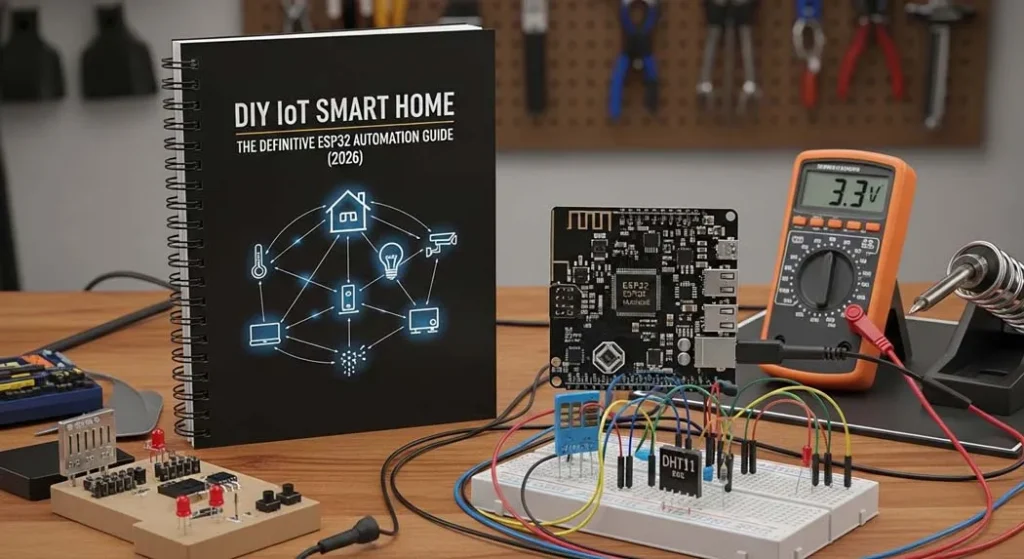
Home Automation System (IoT): Create a complete smart home system where you control devices like lights, doors, and thermostats from your smartphone, tablet, or web interface. Using an ESP8266/ESP32 and a platform like Blynk, this project introduces you to Internet of Things (IoT) development.
Robot Arm: A multi-degree-of-freedom robotic arm controlled via a microcontroller like Arduino or Raspberry Pi. This project covers motion control, inverse kinematics, and servomotor integration, providing a hands-on experience in robotics.
Voice-Controlled Home Automation: Use Amazon Alexa or Google Assistant to control your home appliances. By integrating Arduino with an IoT module, this project teaches voice recognition and cloud-based interactions.
Wearable Health Monitoring System: This advanced project involves creating a wearable device using sensors like ECG and heart rate sensors to monitor health metrics and transmit data to a mobile app. It introduces data collection, analysis, and mobile application development.
4. Robotics Projects
Robotics is an exciting field that combines mechanics, electronics, and programming. Whether you’re interested in building autonomous robots or robotic arms, these projects help develop complex systems and programming skills.
Examples of Robotics Projects:
Line Following Robot: Using sensors like IR (infrared) to detect a line and control the movement of motors, this project introduces autonomous navigation.
Obstacle Avoidance Robot: This robot uses ultrasonic sensors to detect obstacles in its path and alters its course accordingly. It’s an ideal project for learning about sensors, actuators, and autonomous control algorithms.
Gesture-Controlled Robot: Using accelerometers or motion sensors, this robot can be controlled via hand gestures. This advanced project teaches the use of gesture recognition technology and wireless communication.
5. Internet of Things (IoT) Projects
The Internet of Things (IoT) is rapidly changing the way we interact with everyday objects. IoT projects allow you to create devices that collect and exchange data via the internet.
Examples of IoT Projects:
Smart Weather Station: This IoT project involves using sensors like temperature, humidity, and pressure to collect environmental data and transmit it to the cloud for analysis.
Smart Parking System: Using RFID, sensors, and cloud storage, you can create a smart parking system that detects available spots and allows users to book them online.
IoT-Enabled Smart Light System: This project involves controlling streetlights or home lights based on various parameters like time of day, motion detection, or ambient light. It demonstrates real-time data communication and automation.
Essential Components for Electronics Projects
No matter what kind of electronics project you choose, you’ll need some common components to get started. These components include:
Microcontrollers: Popular options like Arduino, Raspberry Pi, and ESP8266/ESP32 serve as the “brain” of your project, interpreting and processing data.
Sensors: Components that collect data from the environment, such as temperature sensors, motion detectors, light sensors, etc.
Actuators: These include motors, servos, relays, and solenoids, which physically move or interact with the project.
Display Units: LEDs, LCD screens, and OLED displays are often used to display data or feedback.
Power Supply: Proper voltage regulation is crucial, whether you are using batteries, a USB connection, or a wall adapter.
Wires and Connectors: Soldering wires or jumper wires, along with connectors, help you build connections between components.
Conclusion
Embarking on electronics projects is an exciting and rewarding journey that fosters creativity and enhances technical expertise. Whether you’re building a simple LED circuit or a complex IoT system, every project teaches valuable lessons in electronics, programming, and problem-solving.
From beginner projects that help you grasp the fundamentals to advanced systems that challenge your design skills, the possibilities are endless. By continually taking on new challenges, you expand your knowledge, improve your practical skills, and develop a portfolio of impressive projects that showcase your capabilities.
Get started with a project today, and watch how your understanding of electronics grows as you create something truly remarkable!